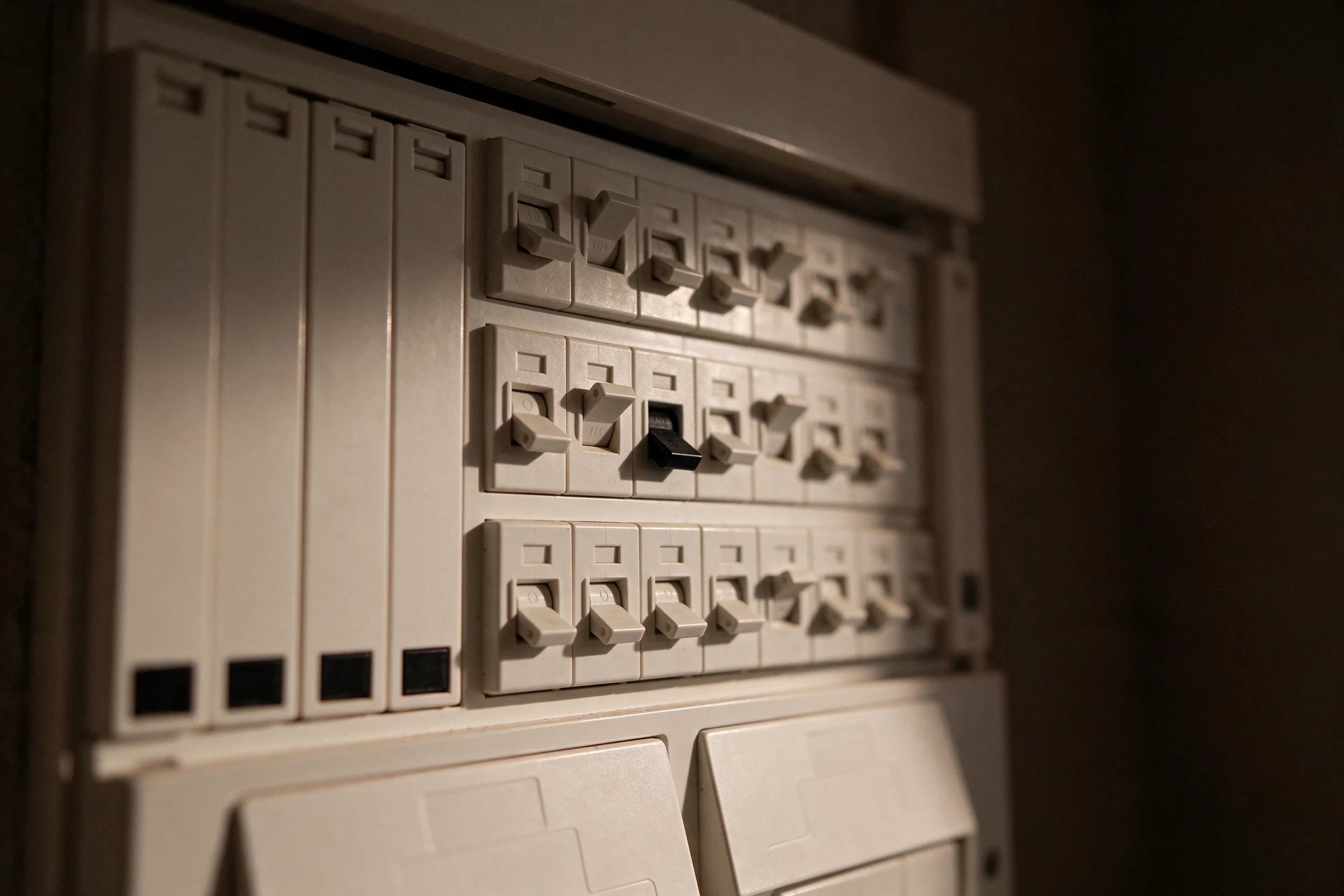
The switchboard is the part of the house nobody thinks about until something goes wrong. It sits in the hallway, the laundry or the garage, quietly doing the most important safety job in the building. If your house is more than 25 or 30 years old, there's a good chance it's still running the board it was built with.
Here are the five things we see most often — and what each one actually means.
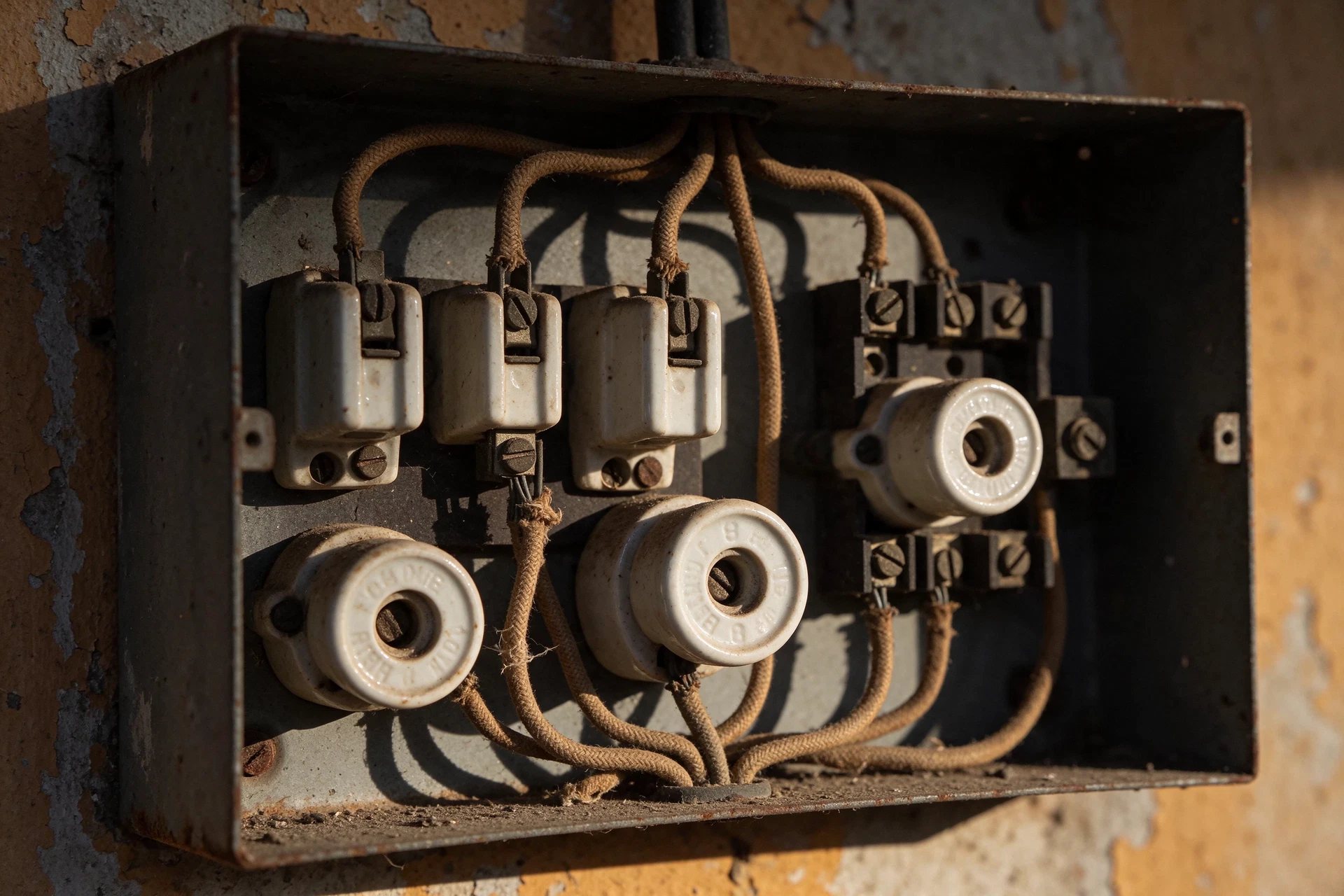
1. You still have ceramic fuses
Porcelain fuse holders with rewireable fuse wire were standard in Perth homes for decades. They do protect the circuit, but they're slow to react, they're easy to "fix" with the wrong gauge of wire, and there's no way to test whether they'll still work when they're needed.
If you've ever had someone put a thicker fuse wire in because the old one kept blowing, that circuit is now protected by something that won't blow when it should. That's a genuine fire risk, not just an inconvenience.
2. There are no safety switches
A circuit breaker protects the wiring. A safety switch — also called an RCD — protects people. It monitors the current going out and coming back, and trips in a fraction of a second if some of it is going somewhere it shouldn't, like through a person or a damaged cable.
Modern boards have safety switches on the lighting and power circuits. A lot of older boards have none at all, or one lonely safety switch on a single circuit. If you look at your board and can't see any switches with a "test" button, that's worth a conversation.
3. The board hums, buzzes or feels warm
A faint click when a big appliance starts is normal. A constant hum, a buzz, a crackle, or a board that's noticeably warm to touch is not. Those can point to loose connections, tired breakers or an overloaded circuit — all things that get worse rather than better.
If you smell burning
Turn off the main switch if it's safe to do so, don't touch the board, and call an electrician straight away. A burning smell around a switchboard is one of the few genuine "drop everything" electrical situations.
4. Breakers trip when you use the oven, kettle or heater
If the power drops out every time the oven and the kettle run together, the circuit is either overloaded or the breaker is failing. Older homes often have the whole kitchen on one circuit because that's how it was wired in the 1980s — long before air fryers, dishwashers and big rangehoods.
The fix isn't always a new board. Sometimes it's splitting the kitchen onto dedicated circuits. But a board with no spare capacity can't do that, which leads to the next point.
5. There's no room for anything new
Adding a split system, an EV charger, a shed, a pool pump or a new oven all need their own circuit. If the board is full — or full of double-tapped breakers someone squeezed in — there's nowhere for the new circuit to go. That's usually the moment people discover the board needs replacing before the new appliance can be installed.
What an upgrade actually involves
A switchboard replacement is usually a day's work, with the power off for most of it. In simple terms:
- The old board and fuses are removed, and the enclosure is replaced or reused if it's suitable.
- A new board is fitted with modern circuit breakers and safety switches on the circuits that need them.
- The existing circuits are tested and reconnected, with any dodgy wiring identified and repaired.
- Every circuit is labelled clearly, so the next person can read it.
- The work is tested and you're given the electrical safety certificate for it.
It's also a good time to sort out the things that have annoyed you for years: the light switch that's on the wrong side of the door, the power point that's never where you need it, the outdoor light that doesn't work.
How to tell where your board stands
Take a photo of the inside of the board with the cover on and send it through. We can usually tell you within a few minutes whether it's a simple fix, a partial upgrade or a full replacement — and give you a price before anyone picks up a screwdriver.